

Use cases
One app.
A lot of real life.
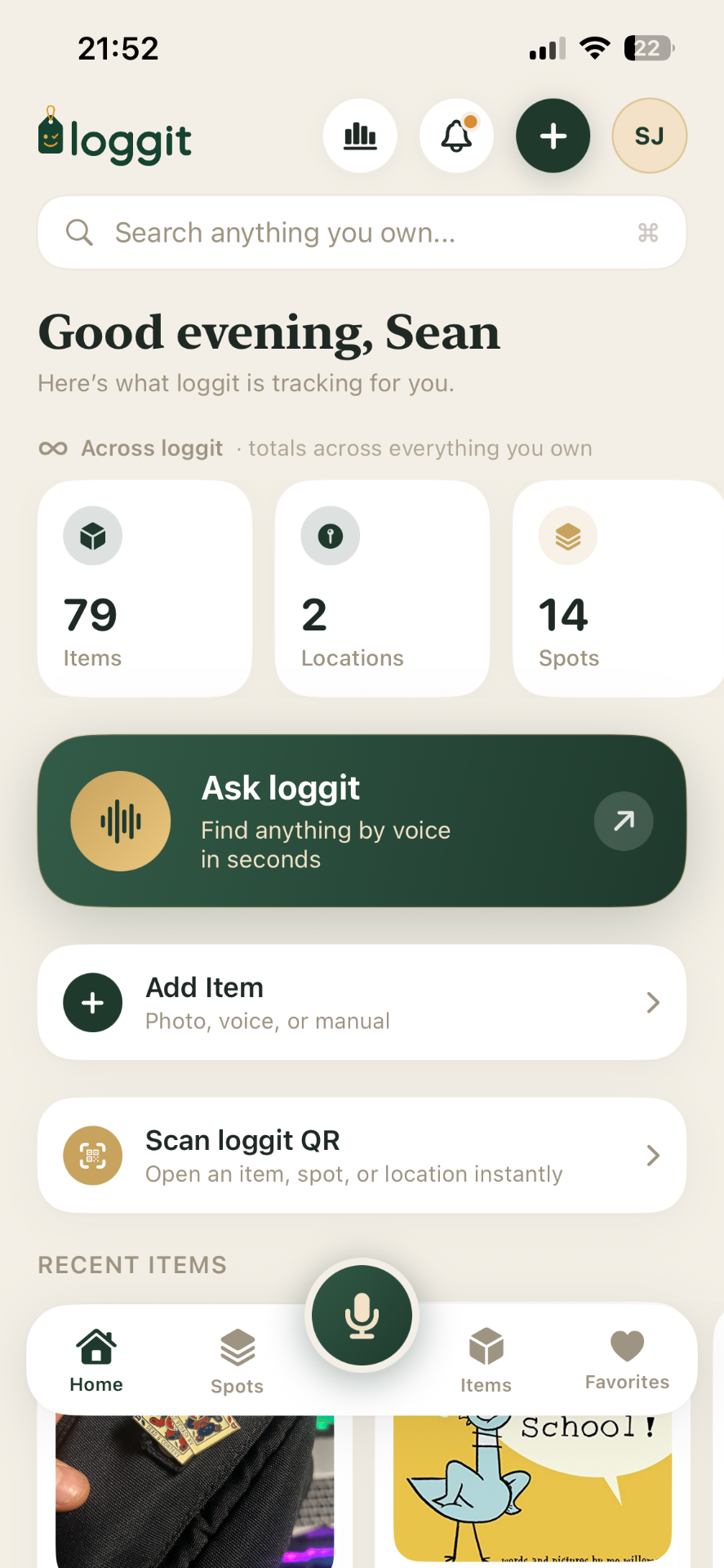
loggit keeps the things you own — and the details connected to them — organized wherever life takes them.
Home & everyday
Know what is in your home, who it belongs to, and what needs attention.
Home inventory
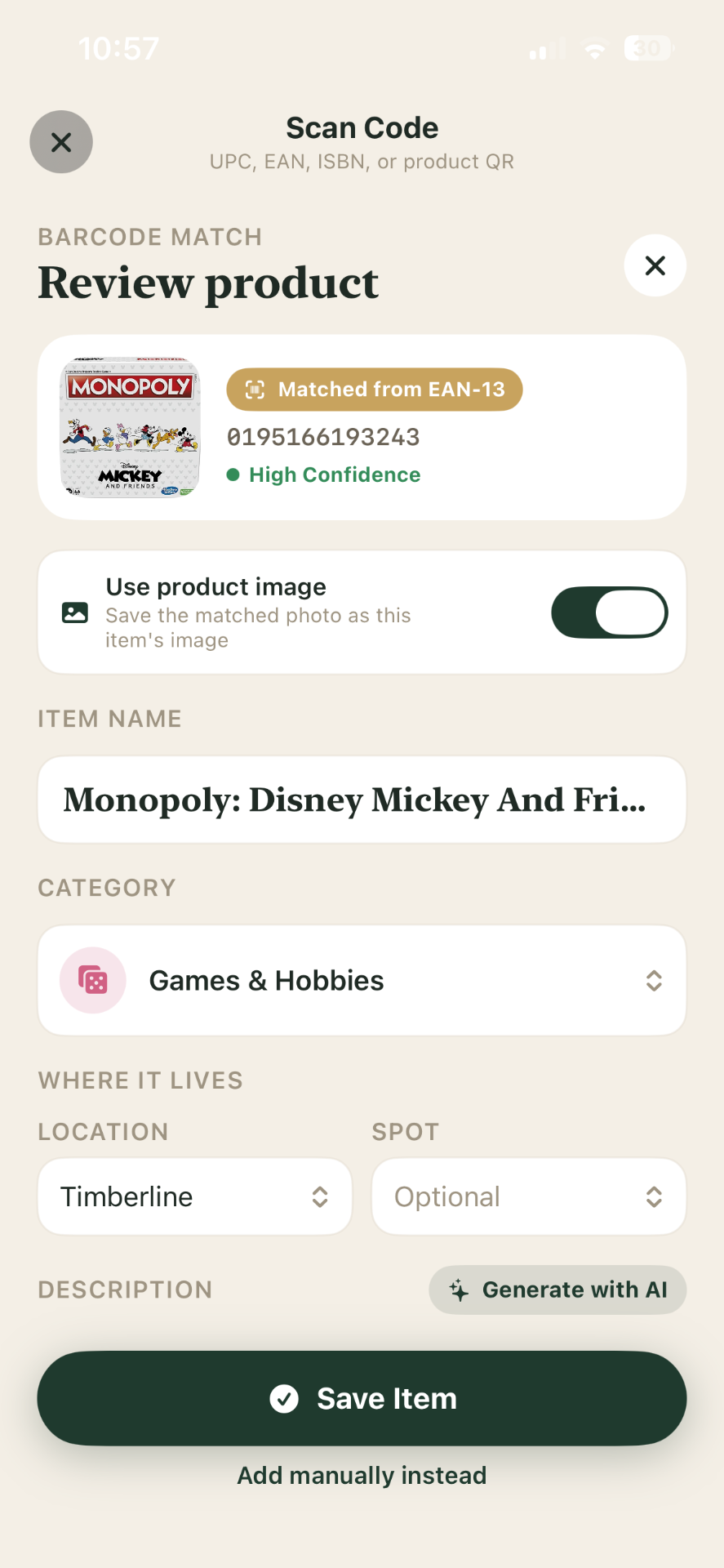
A home inventory is a record of the contents of your home — what each item is, where it sits, what you paid, and which documents belong to it.
Read more →Personal inventory
A personal inventory is a searchable record of what you own and where it is.
Read more →Shared organization
Your inventory is private by default. When someone else needs to find or update things — a partner, a family member, a roommate, a crew member — you can share selected records with them as a viewer or an editor, and revoke that access later.
Read more →Home maintenance
Home maintenance goes wrong when the record is separated from the thing.
Read more →Move & store
Keep track of what is packed, where it went, and what is inside every container.
Moving
The Moving organizer in loggit lets you set up a move, create boxes, log what goes into each one, and track their status through the move.
Read more →Storage organization
A storage unit works when you can answer what is in each container without opening it.
Read more →QR organization
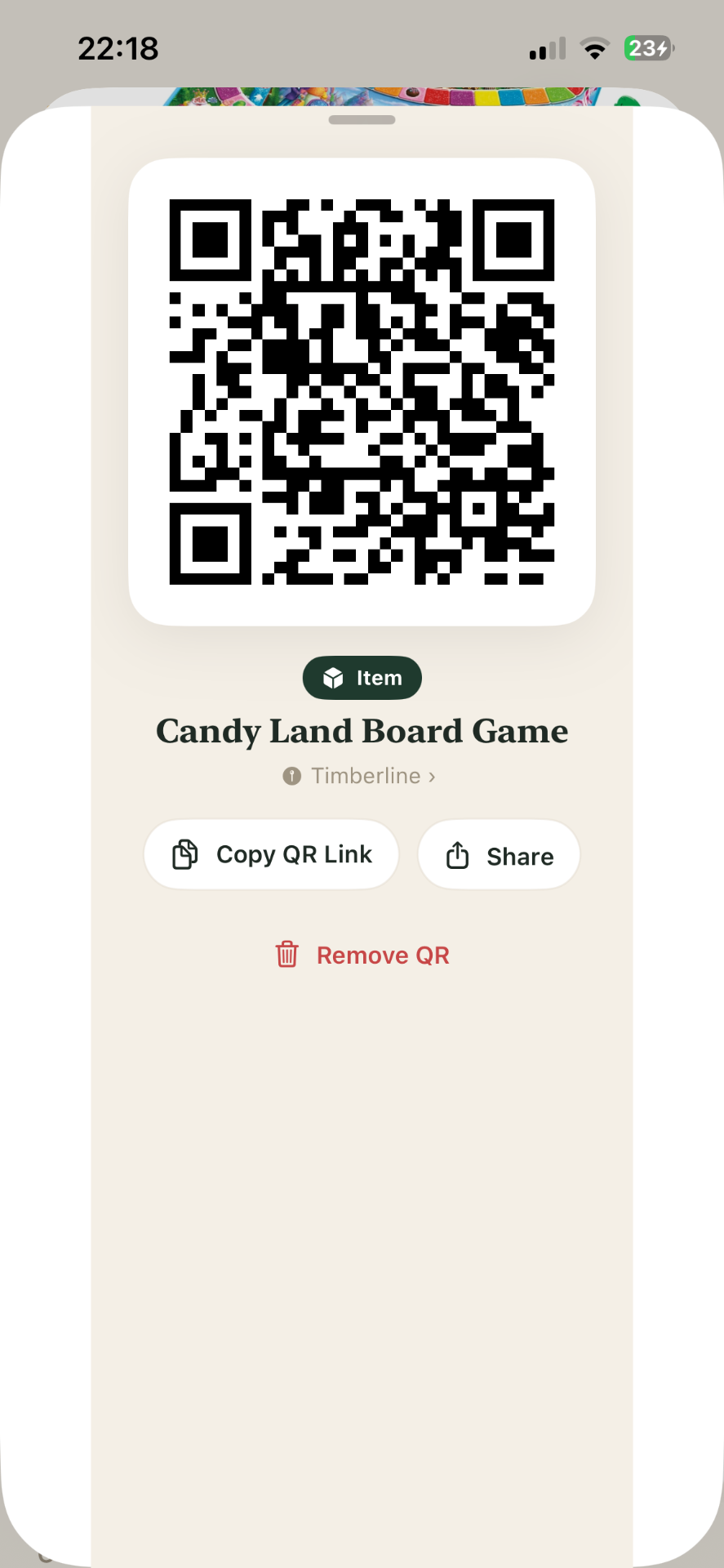
A QR code turns an opaque container into a readable one. loggit generates codes you assign to bins, boxes, spots, and locations; scanning one with the app opens that container's record so you can see the contents without opening it.
Read more →One record. Many moments.
The item you log today keeps working for you when you move it, store it, service it, insure it, pack it, or hand it to someone else.
Own & maintain
Keep the records, values and service history connected to the things you own.
Vehicle records
In loggit a vehicle is an item with its own photos, notes, documents, and reminders.
Read more →Warranties & receipts
A receipt is only useful when you can find it next to the thing it proves.
Read more →Item values
loggit records two figures per item: what you paid, and what you estimate it is worth now.
Read more →Tools & equipment
Tools go missing because they live in twelve different containers.
Read more →Business inventory
loggit helps small operators keep track of physical equipment, tools, and supplies across locations.
Read more →Collect & travel
Track what you collect and pack from what you already own.